Understand what is keeping your mind busy.
Name recurring thoughts and distinguish tasks, worries, and conversations.

Practical tools for everyday life
Leave the day’s demands in their place and make room for your evening.
A practical, reusable toolkit to manage what is still unfinished, create an end-of-day transition, and make more space for personal time.
Get the toolkitIncludes a complimentary 21-day guide to develop Clarity, Calm, and Inner Freedom.
When the day follows you home
An unfinished task keeps coming back to mind.
A message or notification pulls you back into the working day.
You replay a conversation or start mentally preparing for tomorrow.
You do not have to finish everything before taking a break. This toolkit helps you distinguish what needs attention from what can wait, then choose a practical way to close the day.
For responsibilities at home, in your studies, at work, or in everyday life.
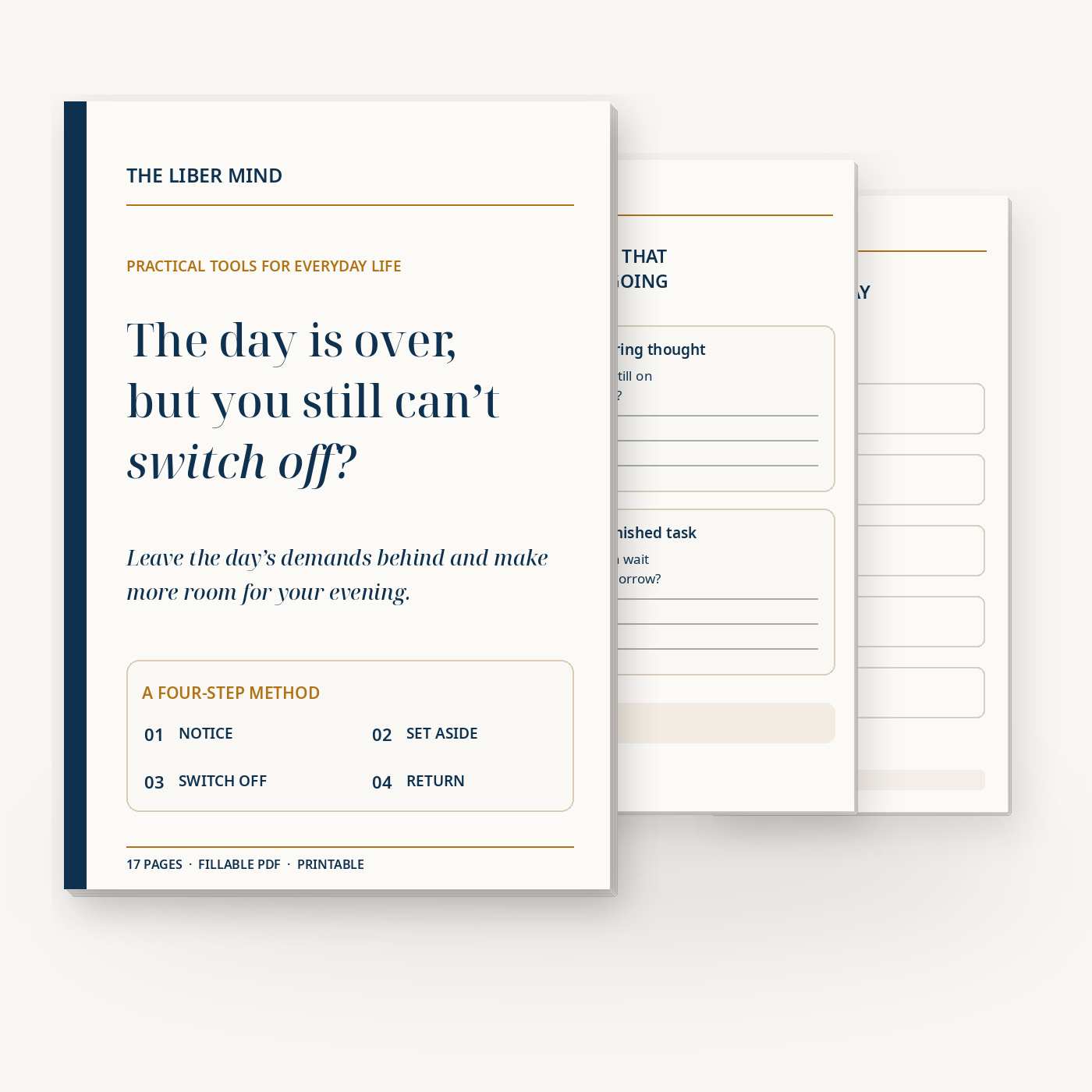
The four-step method
Identify what is still occupying your thoughts: a task, a worry, or an unfinished conversation.
Give unfinished things a reliable place. Write down the next step and when you will return to it.
Choose a small action that marks the shift from responsibilities to personal time.
Return to responsibilities at the time you chose. If a thought comes back during the evening, remind yourself of the plan you have already made.
Inside your 17-page toolkit
Name recurring thoughts and distinguish tasks, worries, and conversations.
Identify genuine needs and decide what can reasonably wait.
Create a clear reminder rather than another long mental checklist.
Work with notifications and availability while allowing for genuine emergencies.
Choose a manageable transition, a change of pace, and a moment for yourself.
Use smaller closing actions, a reusable end-of-day log, and a personal reminder.
Choose the worksheet that fits what is keeping your mind busy today. Spend five to fifteen minutes answering the questions, then try one small, practical action. You do not need to follow every page in order.
A concrete example
One everyday situation. Four small steps.
“I am worried I will forget to reply.”
“I write: tomorrow at 9 am, open the email and draft a short reply.”
“I close my inbox, put down my phone, and start making dinner.”
“If the thought comes back, I remind myself when I chose to deal with it.”
Ending your day does not mean ignoring responsibilities.
It means choosing when to return to them.
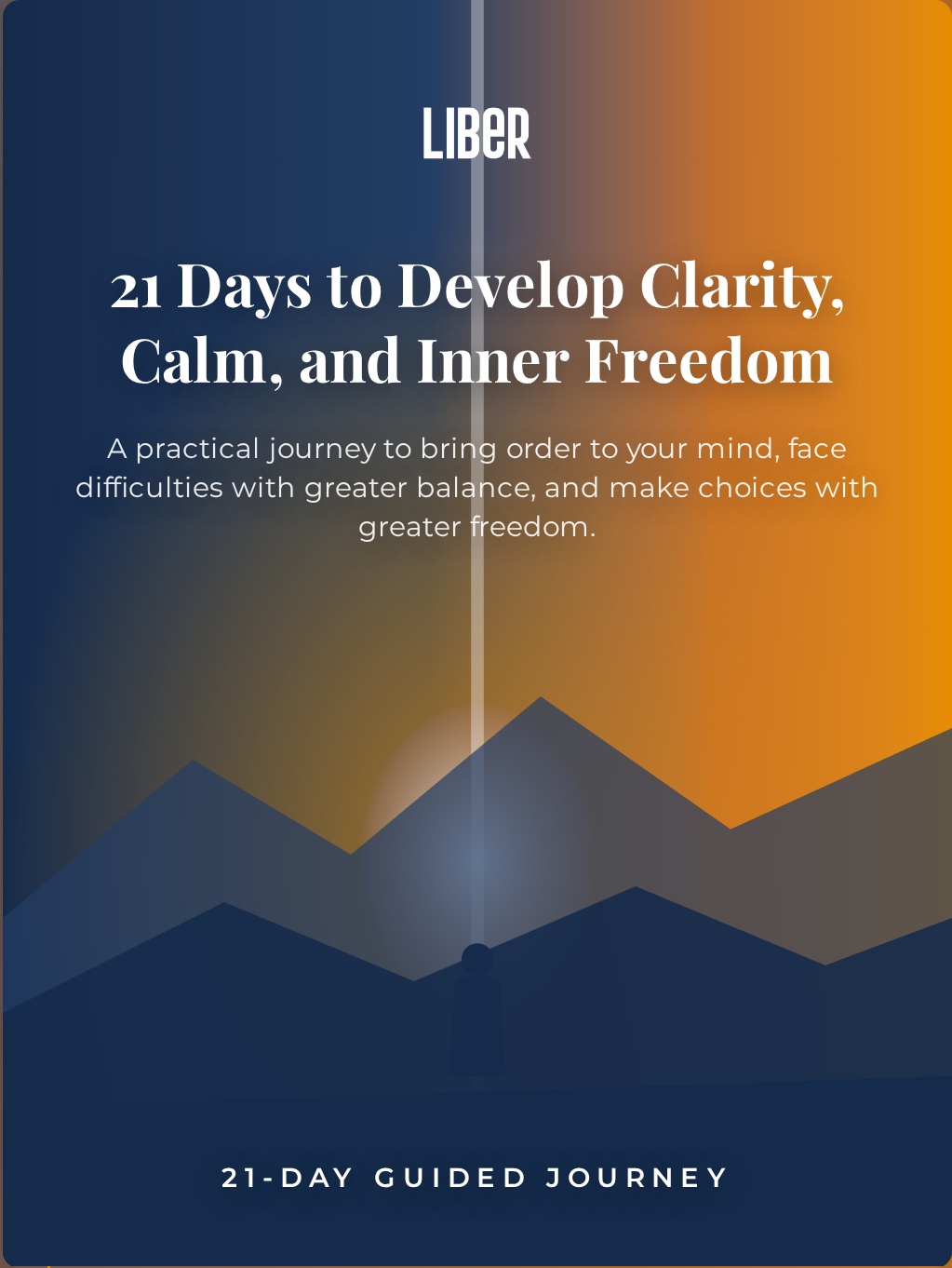
Complimentary 21-day guide included
A complementary 37-page guide with daily reflections, practical exercises, and questions to explore how you think, react, and make choices.
Recognise what deserves your attention and approach decisions with clearer priorities.
Create more space between what happens and how you respond.
Explore how comparison, approval, and expectations influence your choices.
Three seven-day themes. Each day includes a reflection, a practical exercise, space for personal notes, an idea to try during the day, and an evening question. Set aside around ten minutes for reading and practice.
Use the toolkit for a specific end-of-day difficulty. Use the 21-day guide for a broader daily practice.
Read the guide digitally and write your answers in a notebook, phone notes, or on a printed copy. The guide does not contain interactive form fields.
Included at no extra cost. You will find the link to access your complimentary guide inside the purchased toolkit.
One purchase. Tools to return to.
Your complimentary 21-day guide is included.
Purchase the toolkit · View the current price at checkout
A few things to know
Let the evening be yours
Give unfinished things a place, choose when to return to them, and make room for your evening.
Get the toolkit17-page digital toolkit + complimentary 21-day guide